Have you ever looked at a vibrant sunset and wondered if those colors or clouds could tell you something about tomorrow’s weather? It’s a question people have pondered for centuries, and while sunsets can offer clues, it’s helpful to understand the science behind these sky shows.
Let’s break down how colors and clouds at sunset might provide a glimpse into what’s coming next, along with some limitations to keep in mind.
Colors of Sunset: What Do They Mean?
- Reds and Pinks
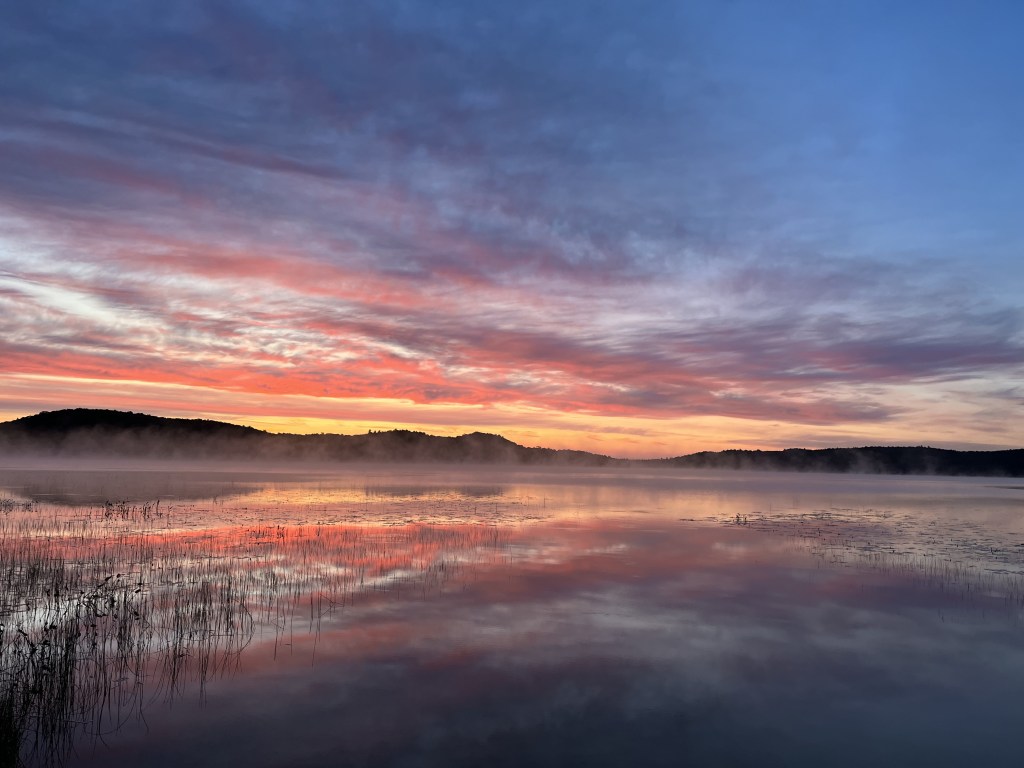
A deep red or pink sunset often points to clear skies and fair weather the next day. These colors happen because the setting sun’s rays travel through a thicker layer of atmosphere, scattering shorter blue wavelengths and leaving behind the longer red ones. This effect is most prominent when the air to the west is dry and free of moisture or clouds, indicating stable, high-pressure conditions. - Oranges and Yellows
Warm orange or golden sunsets can also suggest calm weather, especially when the sky is clear or scattered with light clouds. However, if these colors appear dim or hazy, it could signal that particles like dust, smoke, or moisture are in the air. This might mean the weather is changing, though not always dramatically. - Gray or Purplish Skies
When the sunset leans toward gray or deep purple, it usually means thick, moisture-filled clouds are present. These colors are often a sign of rain or snow approaching, especially if the sun’s light struggles to shine through or is entirely obscured.
Clouds at Sunset: What to Watch For
- Cirrus Clouds (High and Wispy)
These thin, streaky clouds are made of ice crystals and often glow with soft pinks or oranges at sunset. Cirrus clouds on their own usually signal fair weather. However, if they start to thicken or spread out, they might be the first sign of an approaching weather system that could bring precipitation within a day or two. - Altostratus and Stratus Clouds (Layered and Uniform)
These clouds create a flat, featureless appearance in the sky and often mute the colors of a sunset. If you see these clouds during a sunset, they’re a good indicator that rain or snow is on its way, especially if the light appears dim or filtered. - Cumulus and Cumulonimbus Clouds (Puffy or Towering)
Small, fluffy cumulus clouds in the evening are often harmless and suggest continued clear weather. On the other hand, towering cumulonimbus clouds, which are often anvil-shaped, indicate unstable conditions. If these clouds dominate the sunset, thunderstorms, heavy rain, or even hail may be in store.
The Proverb: “Red Sky at Night…”
You’ve probably heard the saying: “Red sky at night, sailor’s delight; red sky in the morning, sailor’s warning.” This piece of wisdom is rooted in science and works well in areas where weather moves predictably from west to east, like in mid-latitude regions.
- A red sky at night means dry air to the west is catching the sun’s rays, suggesting stable, high-pressure conditions are approaching. This often brings good weather.
- A red sky in the morning happens when clear skies to the east meet incoming clouds and moisture from the west, signaling that rain or storms might be on their way.
While this proverb has stood the test of time, it’s most reliable in temperate zones and less so in areas where weather patterns are less predictable.
A Scientific Perspective
The colors of a sunset are the result of Rayleigh scattering, a process where shorter wavelengths of light (like blue and violet) are scattered out of view, leaving longer wavelengths (red, orange, yellow) more visible. At sunset, the sun’s rays travel through a thicker slice of the atmosphere, intensifying this effect.
Clouds add another layer to the story, acting as reflectors that bounce sunlight in various directions. Their height and composition determine how the light interacts with them: high, thin clouds reflect softer hues, while low, thick clouds often appear darker and block the light.
A Word of Caution
While sunsets can hint at upcoming weather, they’re not foolproof predictors. Several factors can affect their accuracy:
- Location Matters: In tropical regions, where weather changes rapidly, or in deserts, where dust often colors the sky, sunsets might not reliably indicate tomorrow’s conditions.
- Localized Weather: Mountainous or coastal areas often experience localized weather phenomena that can override larger atmospheric patterns.
For the most reliable forecast, pair sunset observations with trusted weather sources.
Takeaway
A sunset isn’t just a beautiful end to the day—it’s also a window into atmospheric changes. Whether it’s the fiery reds of dry, stable air or the muted grays of an approaching storm, paying attention to the sky can deepen your connection to nature and even give you a small head start on tomorrow’s plans.
Next time you see a glowing horizon, take a moment to enjoy the view—and maybe, just maybe, you’ll pick up a hint of what’s coming next.


 EVERWILD ADVENTURES
Leave a comment