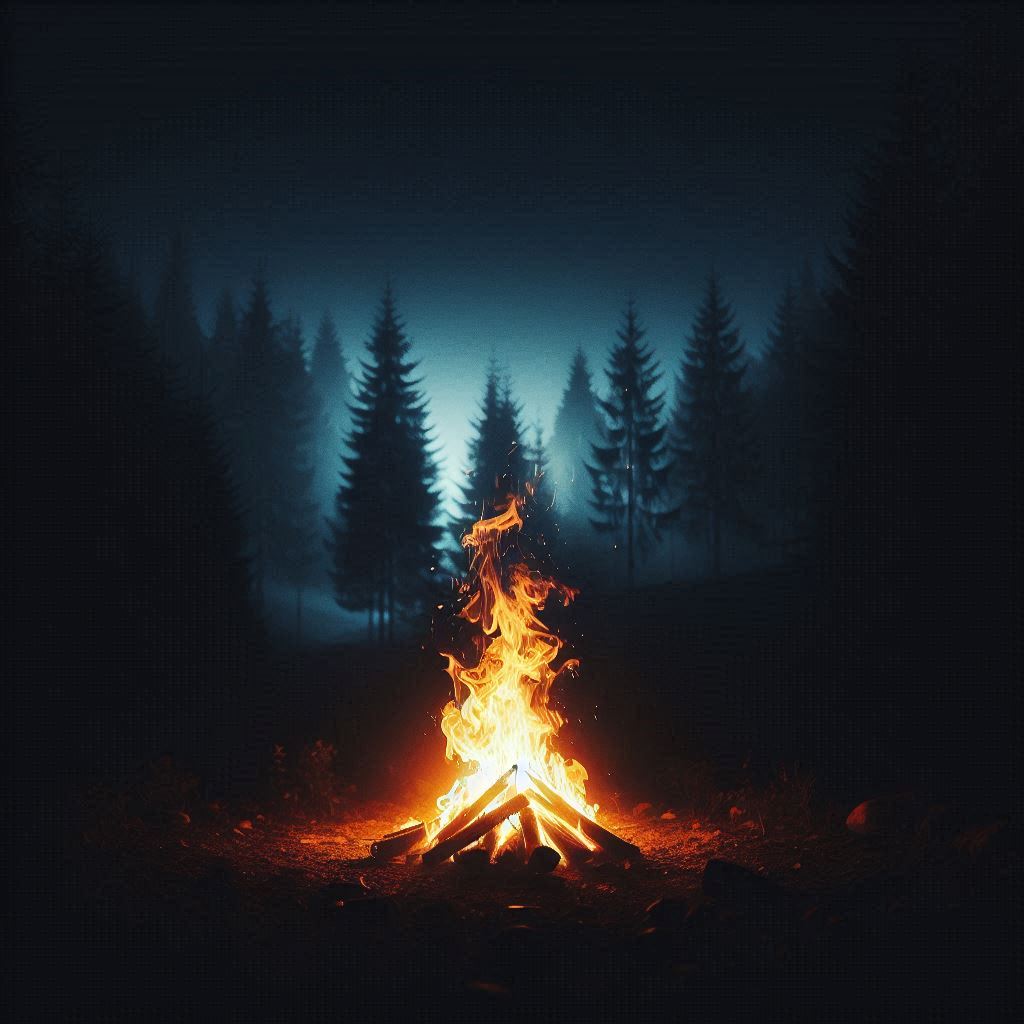
Fire is one of the most primal and powerful elements, symbolizing both creation and destruction. From the first spark struck by early humans to the crackling glow of a modern campfire, fire has been a central part of human life, shaping our survival, culture, and spirituality. The campfire, in particular, is a vessel of warmth and light, carrying with it the echoes of our ancient past.
The Origins of Fire: From Myth to Reality
The discovery of fire was a transformative event for early humans. It was likely first harnessed from natural sources such as lightning strikes or volcanic eruptions, and it became an indispensable part of survival. Fire was mysterious and powerful, quickly entwining itself with myths and legends. In many cultures, it was believed to be a divine gift, carried by the gods or born of celestial forces.
Greek mythology, for example, tells of Prometheus, the Titan who stole fire from Zeus and gave it to humanity. This act of rebellion signified more than just bringing warmth and light; it represented knowledge, freedom, and the spark of civilization itself. Prometheus’s gift laid the foundation for progress, enabling humans to cook food, forge tools, and create societies. In Norse mythology, the god Loki, known for his dual nature of creation and destruction, personified fire’s unpredictable and transformative power. Fire was not only an element; it was a force with life and consciousness, one that humans could harness to change their fate.
Across cultures, fire was seen as a fundamental force in the universe. Ancient cultures revered fire as a god or spirit. For the Romans, the goddess Vesta presided over the hearth, symbolizing the sacredness of the flame in homes and temples. The early Celts also held fire in high regard, using it in rituals and festivals that celebrated the cycles of nature. These beliefs illustrate fire’s enduring role as a bridge between the human and the divine, a source of both protection and power.
The Spirituality of the Campfire
The campfire, with its rhythmic crackling and flickering flames, has a deep spiritual resonance. It is where humans gather to share stories, celebrate milestones, and find comfort in each other’s company. To sit by a campfire is to witness the primal heart of human experience, to feel a connection to the ancestors who once huddled around a fire for warmth and safety. There is something almost sacred about the act of lighting a fire, a small flame that holds within it the power to transform a dark, cold night into a realm of light and warmth.
Campfires have a way of drawing out the most meaningful moments in our lives. They create a space where conversations deepen, bonds strengthen, and moments of introspection are embraced. The flame is hypnotic, its flicker and glow inviting contemplation and a sense of wonder. It reminds us of our shared humanity, grounding us in the present moment while connecting us to the past and future.
Many traditions and gatherings still incorporate fire as a central element in ceremonies and celebrations. The lighting of a campfire can signify the start of a journey or the commemoration of an event, anchoring people in a shared experience. When we gather around a campfire, it’s as though we tap into an ancient tradition, one that transcends time and place, reminding us that the stories we tell, the songs we sing, and the laughter we share are part of an unbroken chain of human connection.
The Practical Uses of the Campfire
Beyond its spiritual and social significance, the campfire has been essential for survival since the earliest days of humanity. It provided warmth, allowing our ancestors to venture into colder climates and stay safe through the night. The heat of a campfire made it possible to cook food, turning raw ingredients into nourishing meals and making nutrients more digestible. This ability to cook food contributed to brain development and social interaction, helping to forge stronger communities.
Campfires also acted as a barrier against the natural world’s dangers. The flickering light and the crackle of flames kept wild animals at bay, while the fire’s glow could be seen from a distance, helping people find each other in the dark. In addition to its practical benefits, the campfire’s light created a beacon for explorers and travelers, guiding them home and providing a way to mark their path.
Throughout history, campfires have been used to signal and communicate over long distances. Fires were lit on hilltops to warn of danger, guiding entire communities with their glow. In wartime, campfires and signal fires have been used to convey messages, coordinate movements, and rally troops. These uses illustrate how fire, even in its simplest form, can unite people in moments of crisis and foster a sense of safety and solidarity.
Even in the modern world, the campfire continues to be an essential part of camping, outdoor adventures, and leisure activities. Whether on a camping trip, at a beach bonfire, or even a backyard gathering, the campfire serves as a reminder of our connection to nature and to each other. It is a touchstone that transcends time, a simple yet profound way to gather, reflect, and appreciate life’s most essential moments.
The Campfire in Modern Times
Today, campfires continue to hold a special place in our lives. Whether on a camping trip, a beach bonfire, or even a backyard gathering, the campfire brings people together in a way that few other experiences can. It reminds us of simpler times, where life was more connected to the rhythms of nature. There is a certain magic in the act of gathering around a fire, watching the flames dance as stories are shared, songs are sung, and quiet moments are cherished.
Campfires are also a place for renewal and escape. In the glow of a fire, the distractions of modern life fade into the background, and the focus turns inward, to the here and now. It’s a reminder that no matter how far we have come, we still carry within us the same spark that lit our ancestors’ first fire—a spark that, when kindled, continues to illuminate our paths, guide our conversations, and bring us back to a place of peace and belonging.
Conclusion
Fire, and especially the campfire, represents the enduring spirit of humanity. From its ancient beginnings as a gift from the gods to its modern incarnation as a source of warmth, community, and introspection, the campfire is more than just a flame; it is a beacon of connection and transformation. It is a force that burns not only in the physical world but in the heart of every gathering, reminding us of our shared past, our present joys, and the eternal light that lives within us all.


 EVERWILD ADVENTURES
Leave a comment